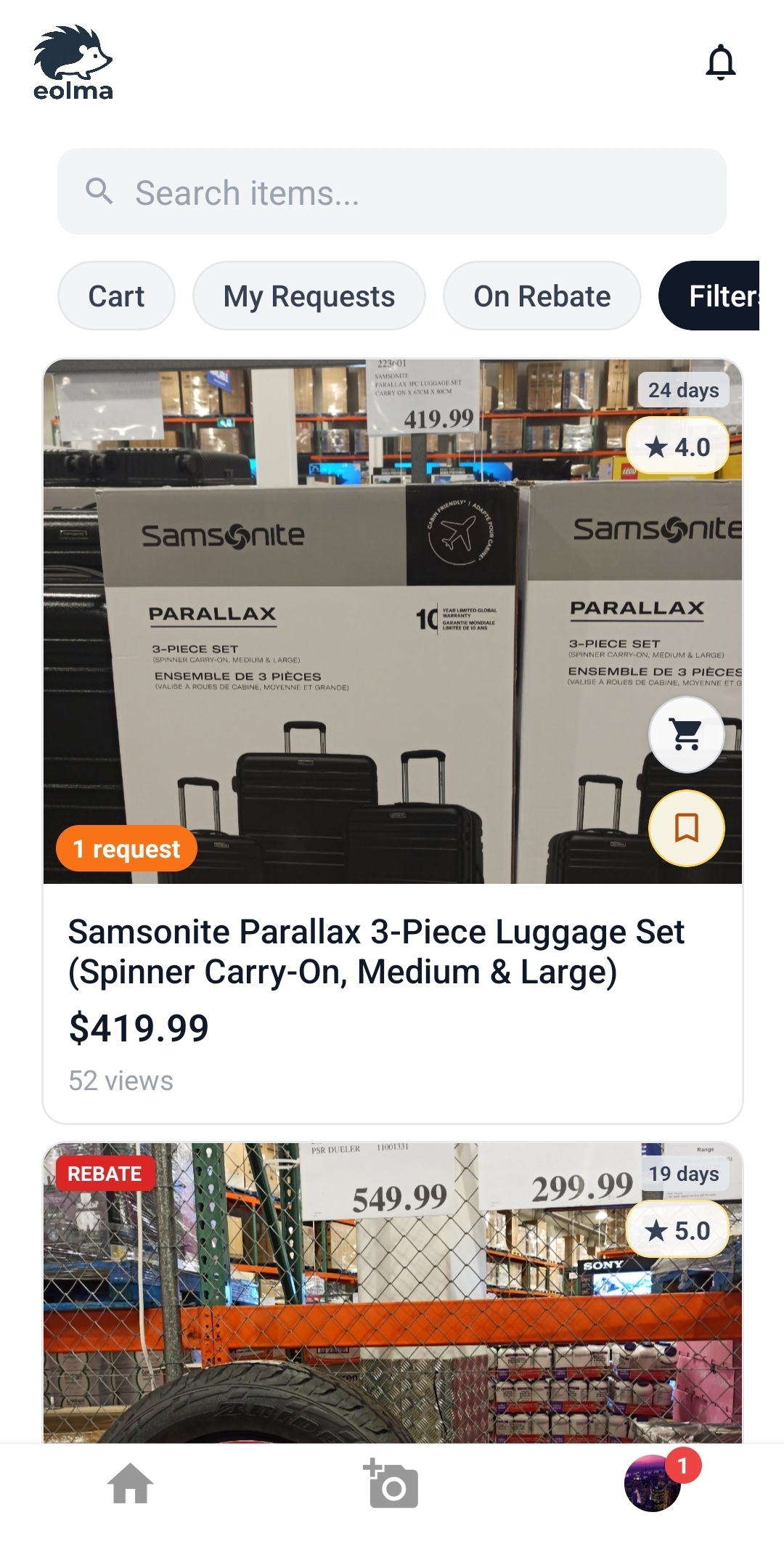
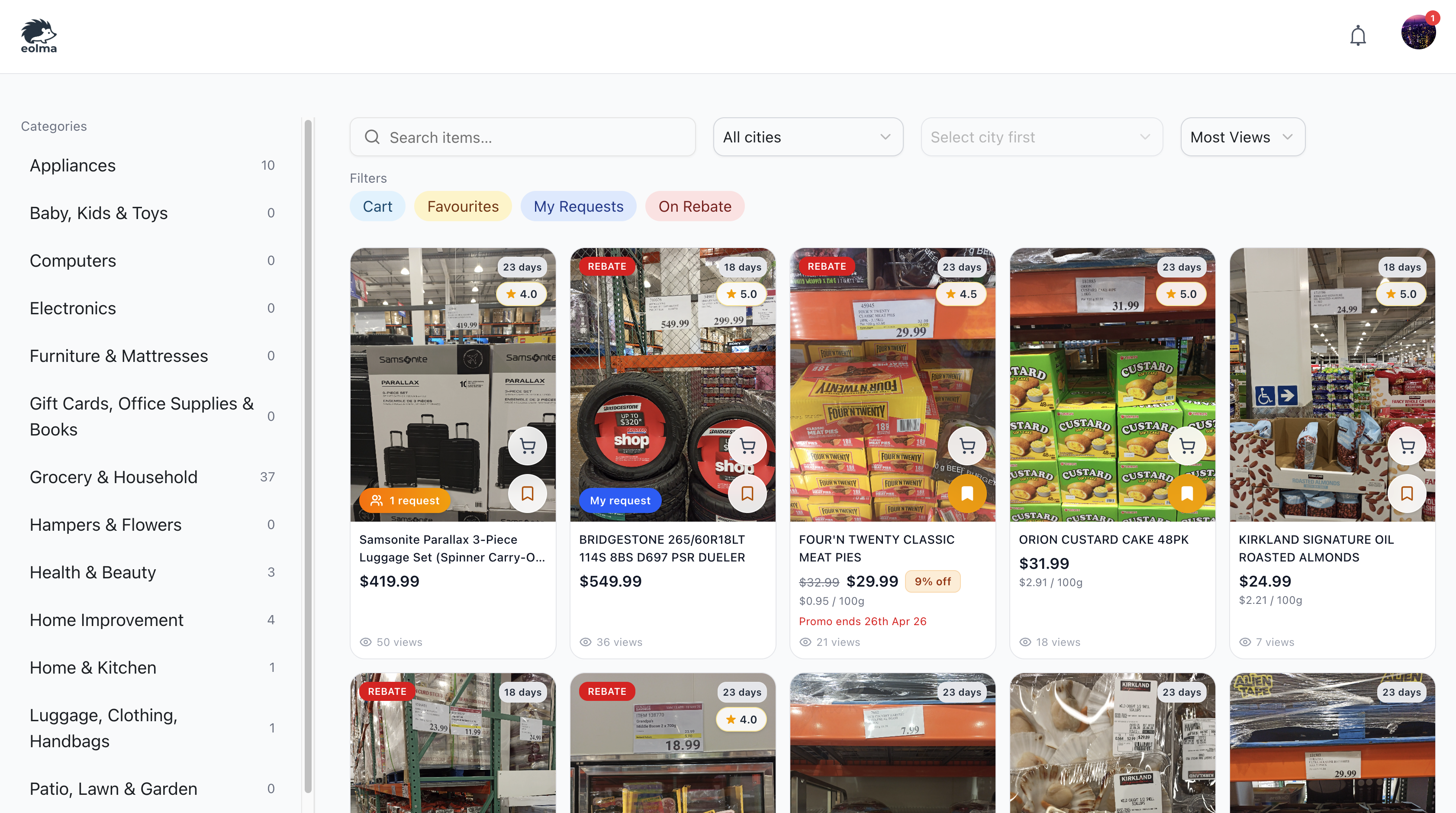
Discovery and browsing
Users can search the catalog, browse items, and discover active products that already have split requests.
eolma connects you with people nearby who want to split bulk purchases. Instead of skipping a great value pack because it is too large, you can create a split request, find interested people nearby, chat in-app, and arrange pickup.
eolma helps users turn a bulk item into a visible local split opportunity that other people can join.
A lot of shoppers want bulk-store value without committing to oversized packs or excess waste.
The product is designed to reduce friction from the moment someone spots a bulk item to the moment a split is completed.
Users can browse the catalog, discover available items, or upload a product image for a new bulk purchase opportunity.
A user specifies what they want to split so nearby people can express interest and join the request.
Participants use in-app messaging to confirm availability, share pickup timing, and exchange payment details when ready.
Split request state changes are visible to participants so there is a clear path from interest to acceptance to completion.
Ratings and profile context help users choose reliable people for future local splits.
The model works particularly well for pantry goods, household essentials, frozen items, and other repeat warehouse purchases.
The product brings discovery, split request management, messaging, and price-drop notifications into one workflow built around real local shopping decisions.
Users can search the catalog, browse items, and discover active products that already have split requests.
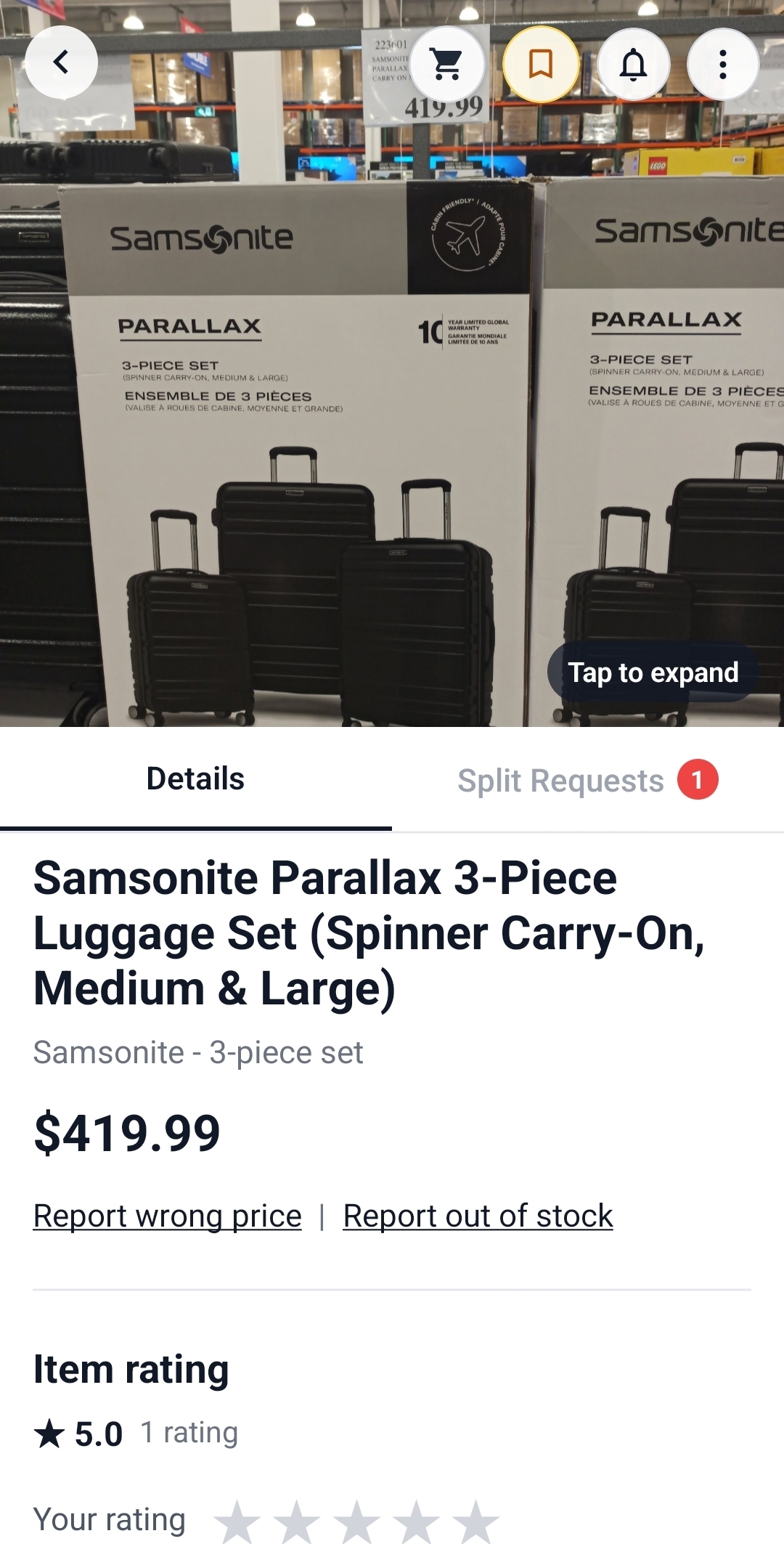
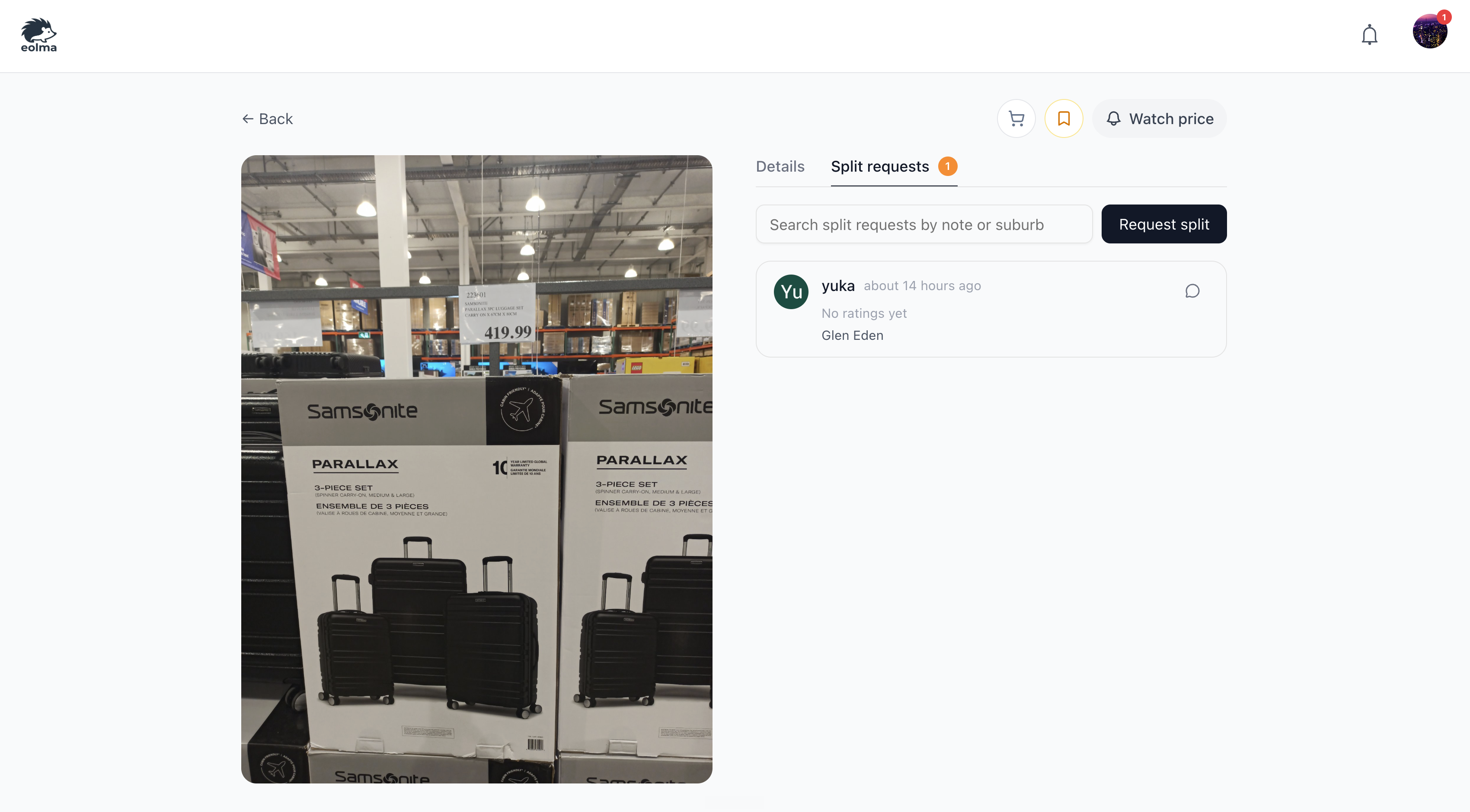
The item details view gives users the product context, shows open split requests, and lets them create a new split request from the same screen.
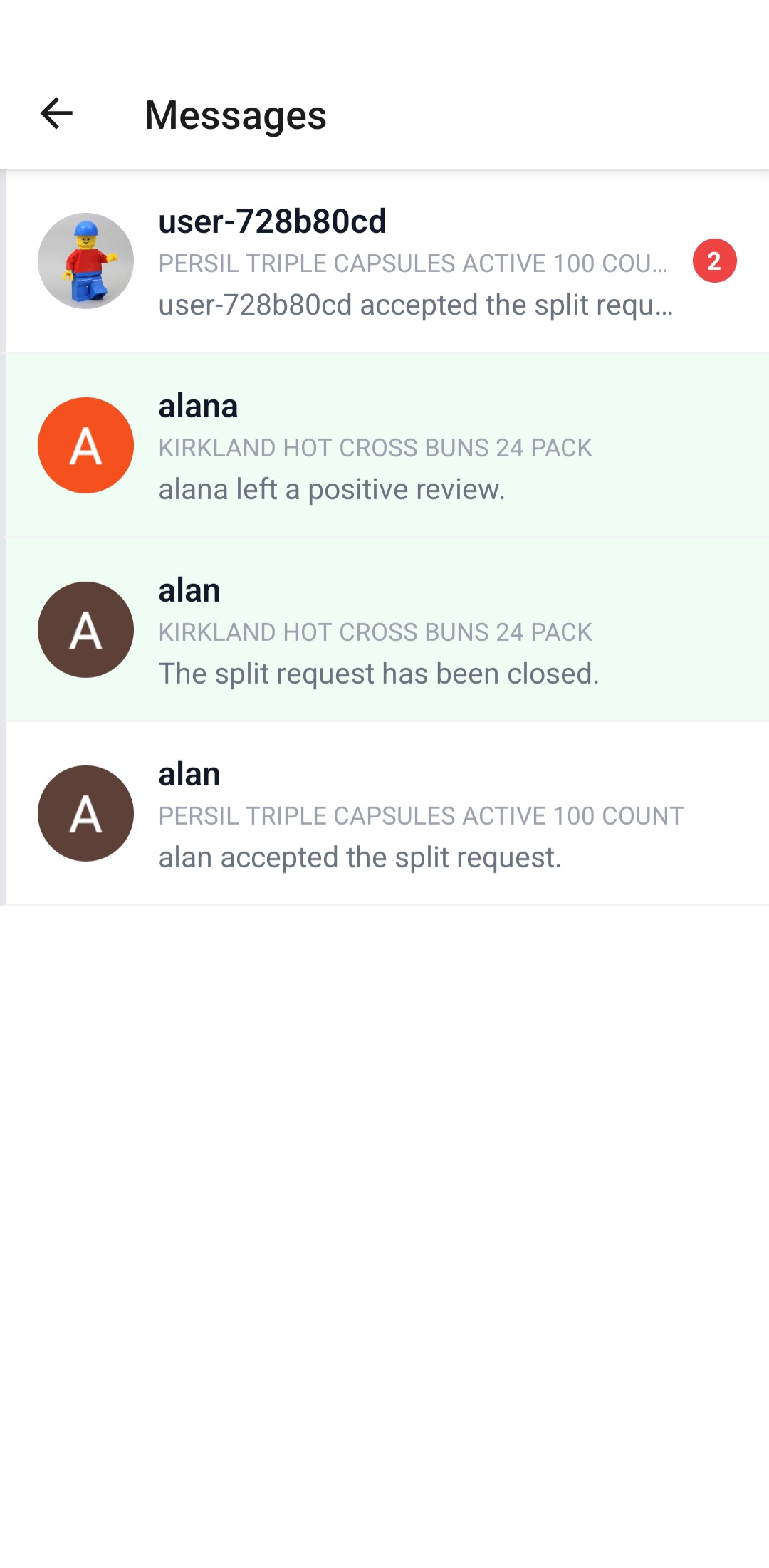
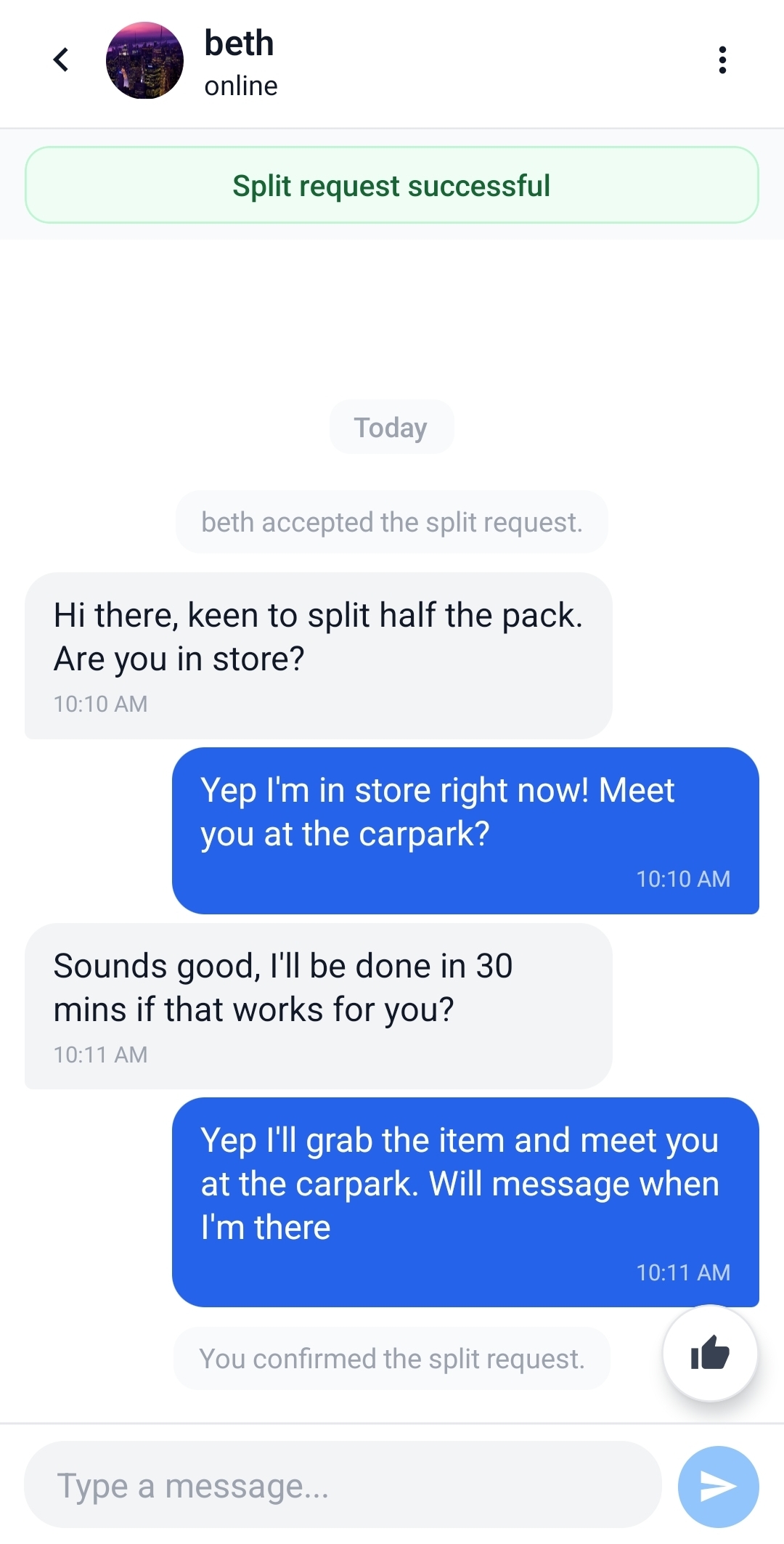
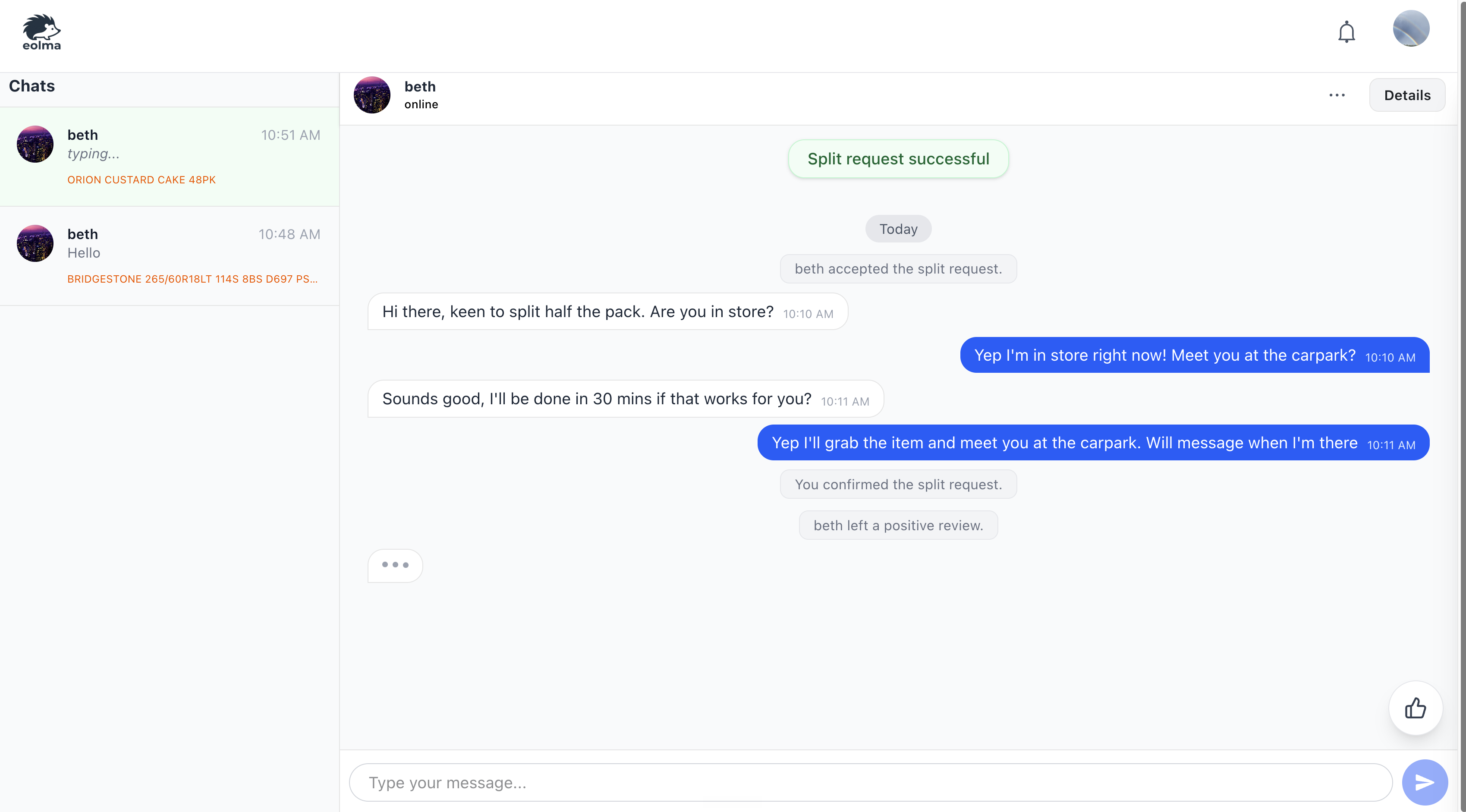
Participants coordinate timing, pickup, payment, and status changes inside the message thread rather than leaving the product to finish the split.
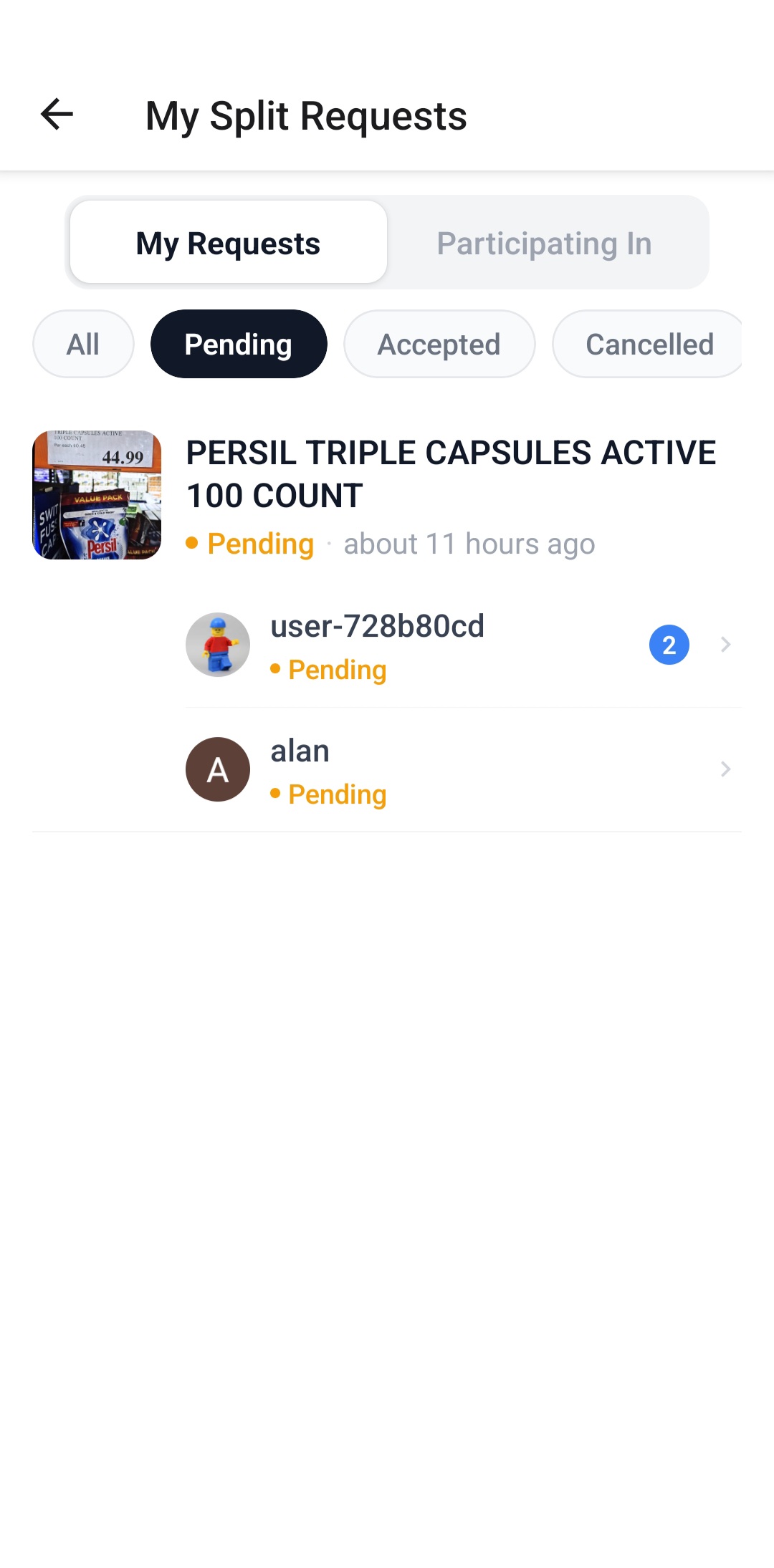
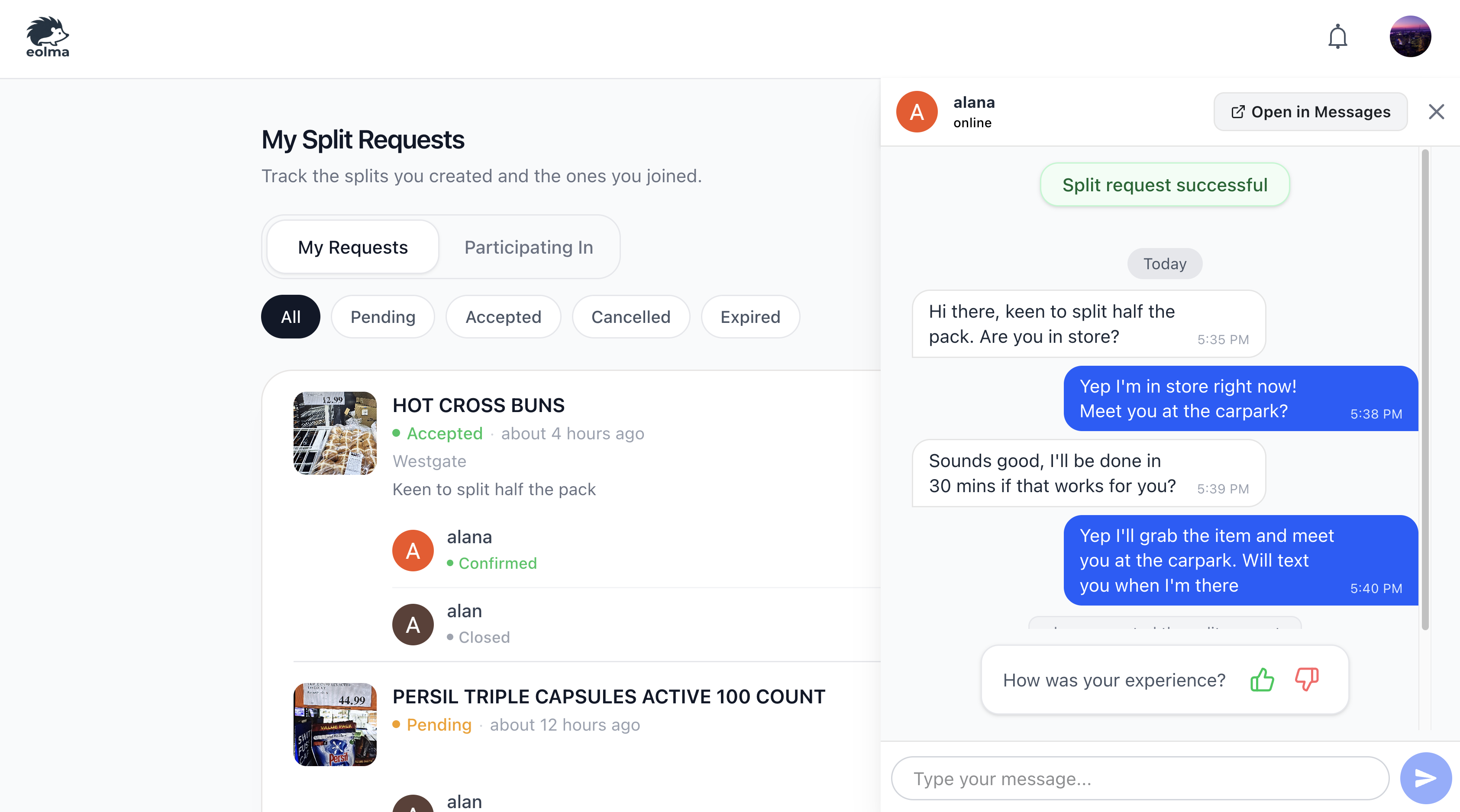
This view helps users manage their split requests over time, keep track of who is splitting which item, and review the status of current and past participation.
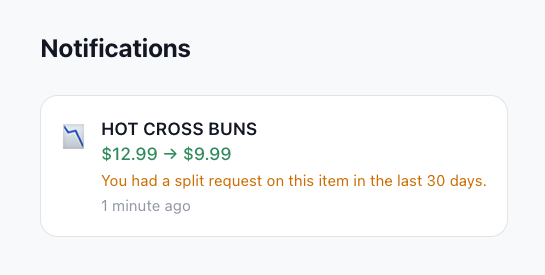
Users can receive a notification when an item they care about drops in price, creating a timely reason to reopen the product and act on a better-value split.
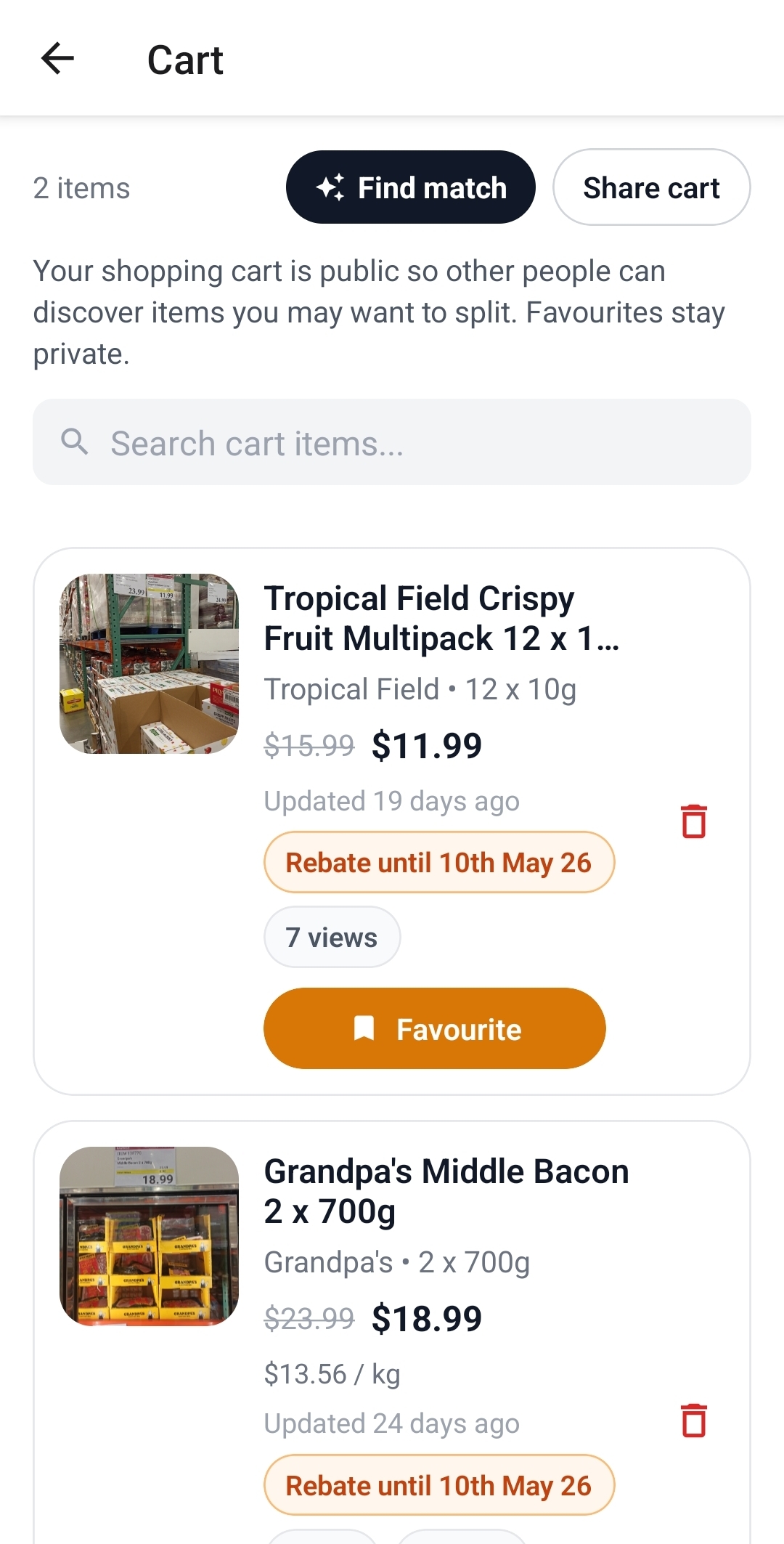
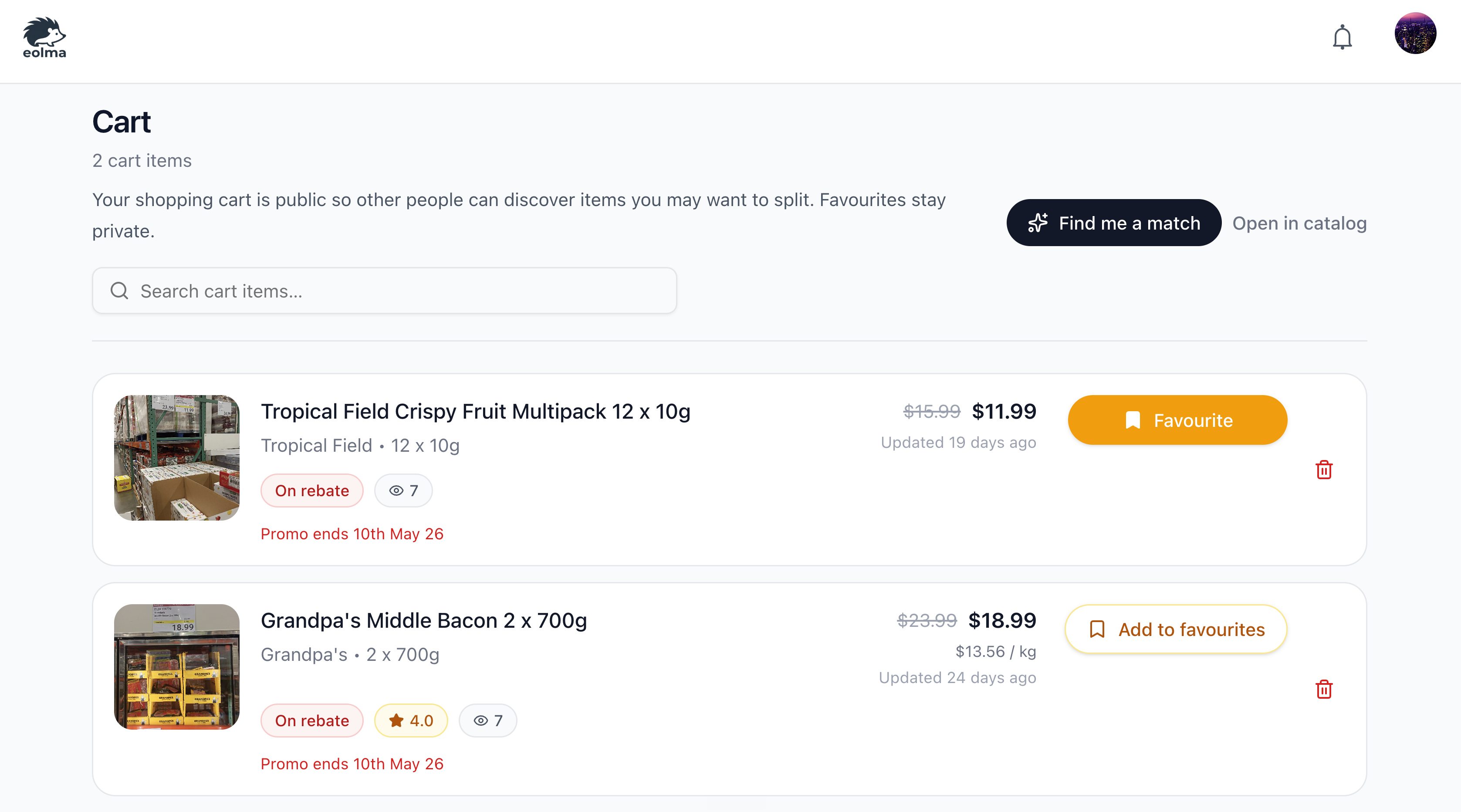
Add the items you want to buy and get automatically matched with others with a similar cart.
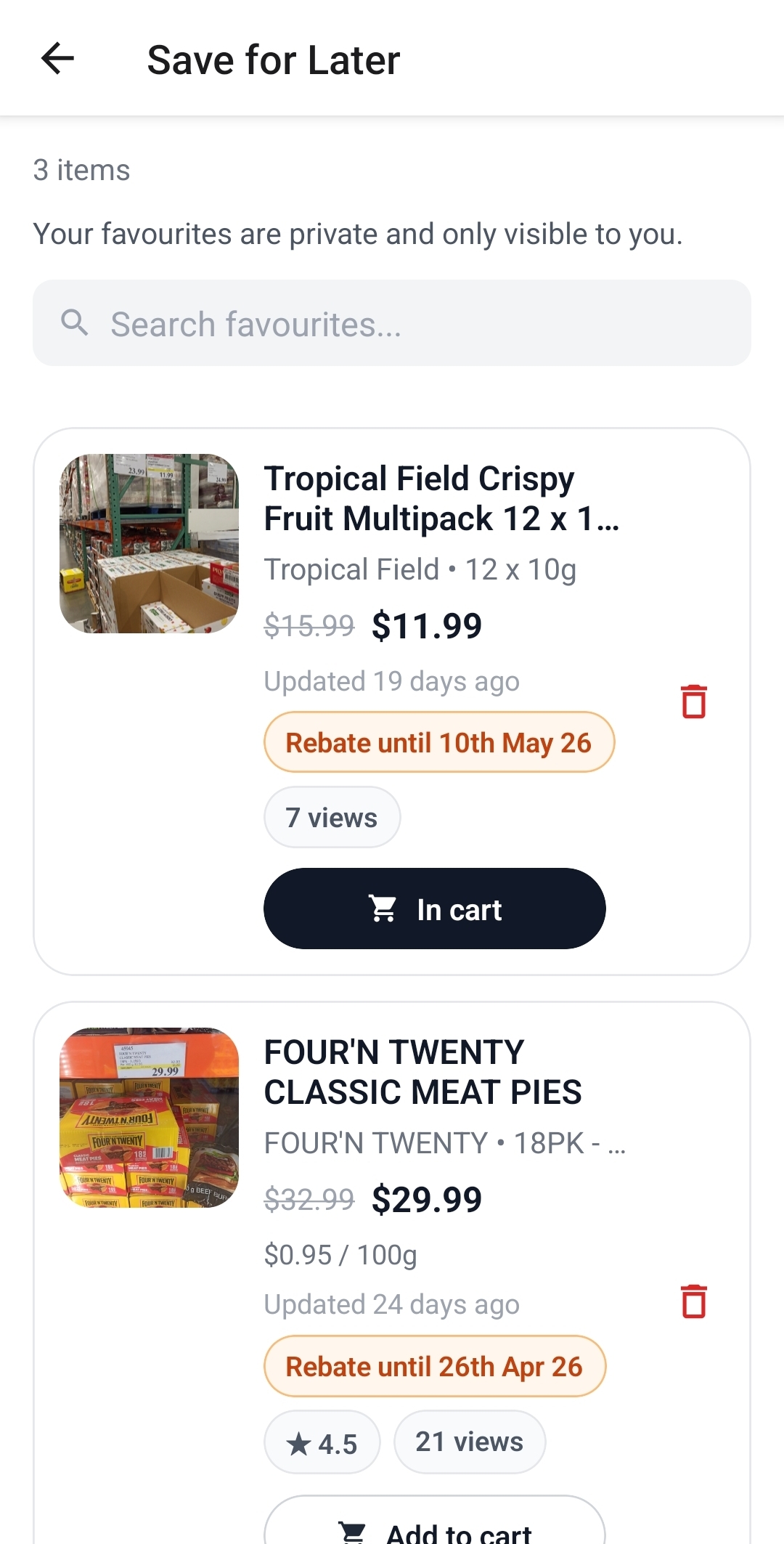
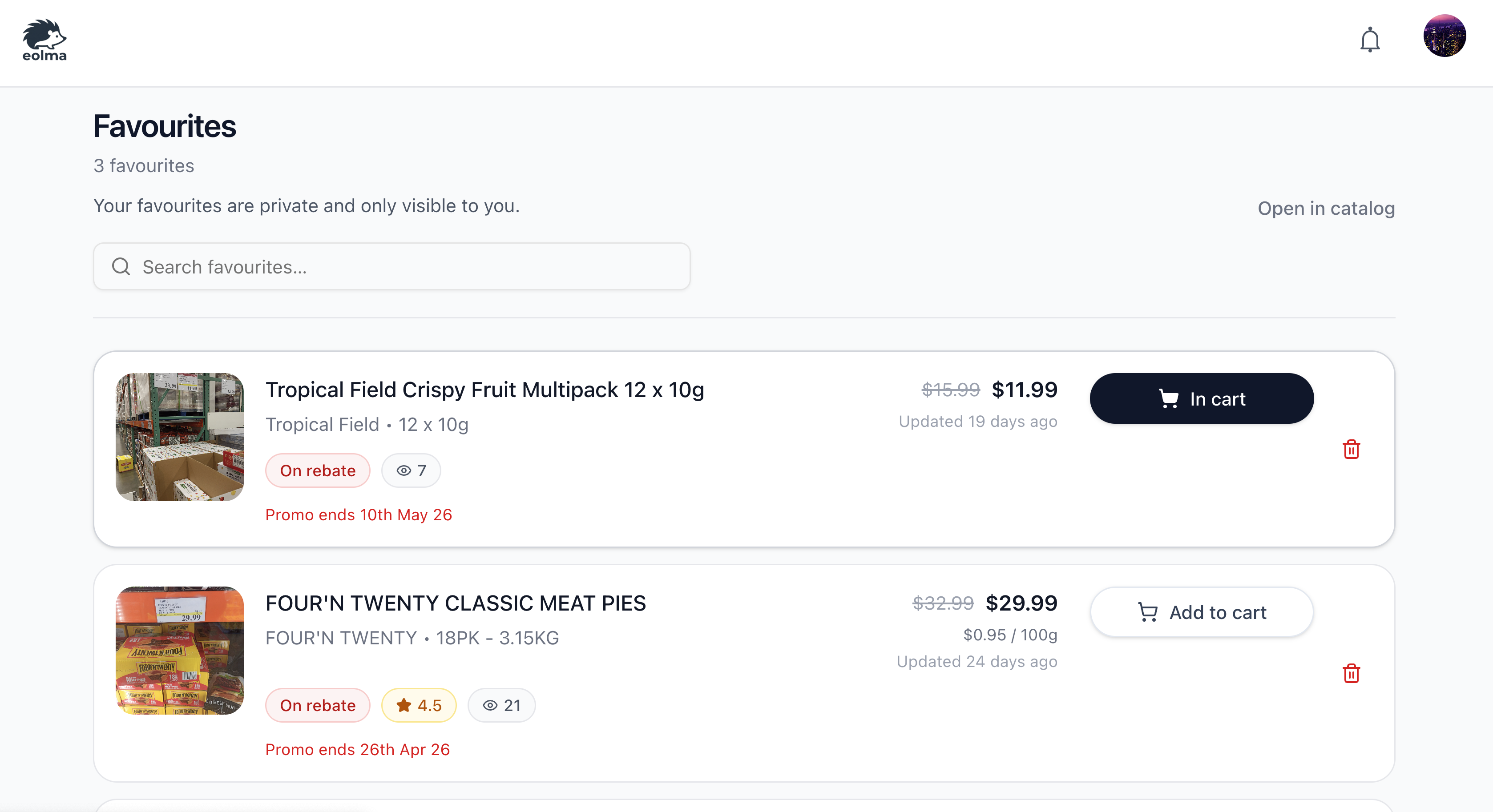
Track items you are interested in and return to them later when you are ready.
A proper split marketplace needs more than listings. It needs messaging, safety signals, privacy controls, and a way to make repeated local interactions feel reliable.
eolma is built for authenticated usage rather than anonymous posting, with account-level context that supports more trustworthy local interactions.
The product includes user ratings so trust can compound over time and the best participants become easier to identify.
Messaging is part of the core workflow because local splits often depend on quick coordination, not delayed marketplace replies.
The local-first model matters: this only works if users can find nearby people and arrange realistic pickup logistics.
Consumers are more price-sensitive, more comfortable coordinating through apps, and more interested in reducing waste. eolma sits at the intersection of all three.
Bulk stores are compelling on price, but a lot of the addressable market cannot use those quantities alone. eolma turns that mismatch into a repeatable product opportunity.
People already coordinate these kinds of splits manually. eolma gives that behaviour a dedicated workflow, local discovery layer, and trust system.
eolma is focused on making a specific consumer behaviour easier: coordinating nearby people to share bulk purchases that are too large for one buyer. The product is intentionally narrow, practical, and built around repeated local use.
Warehouse and bulk-store purchases that are too large, too expensive, or too wasteful for one household alone.
Catalog, split requests, chat, ratings, profile flows, and price drop notifications.
Prove repeat local demand and make bulk splitting feel normal, safe, and operationally easy.
Explore the app and see how the product works in practice. This is not a generic splash page; it is a focused consumer workflow for a real, repeatable use case.